
Your shingles look fine from the driveway. Then the snow starts melting, and suddenly there is a brown stain on your ceiling.
What happened?
Winter roof leaks in Utah do not always start with missing shingles. Clogged gutters, blocked roof valleys, and damaged flashing can give water a way into your home—even when the rest of the roof looks intact.
Before you assume you need a whole new roof, it helps to understand these smaller trouble spots. Here is what to watch for and how to address problems before they become bigger repairs.
3 Trouble Spots Behind Winter Roof Leaks in Utah
1. Gutters: When Water Has Nowhere to Go
Gutters collect runoff, while downspouts carry it away. However, leaves, pine needles, and other debris can block that path. Water may overflow or back up around the roof edge, potentially finding its way beneath shingles.
In winter, trapped water can freeze and add stress to the drainage system. Gutters filled with debris or ice cannot do their job properly, and the added weight can damage them.
Watch for visible debris, overflowing gutters, and sections pulling away from the house. These are reasons to arrange cleaning or an inspection—not wait for a ceiling stain.
GAF’s winter roof maintenance guide recommends clearing gutters before winter and getting professional help whenever access is unsafe. Have the downspouts checked too; an open gutter does little good if its outlet is blocked.
2. Roof Valleys: Small Channels With a Big Job
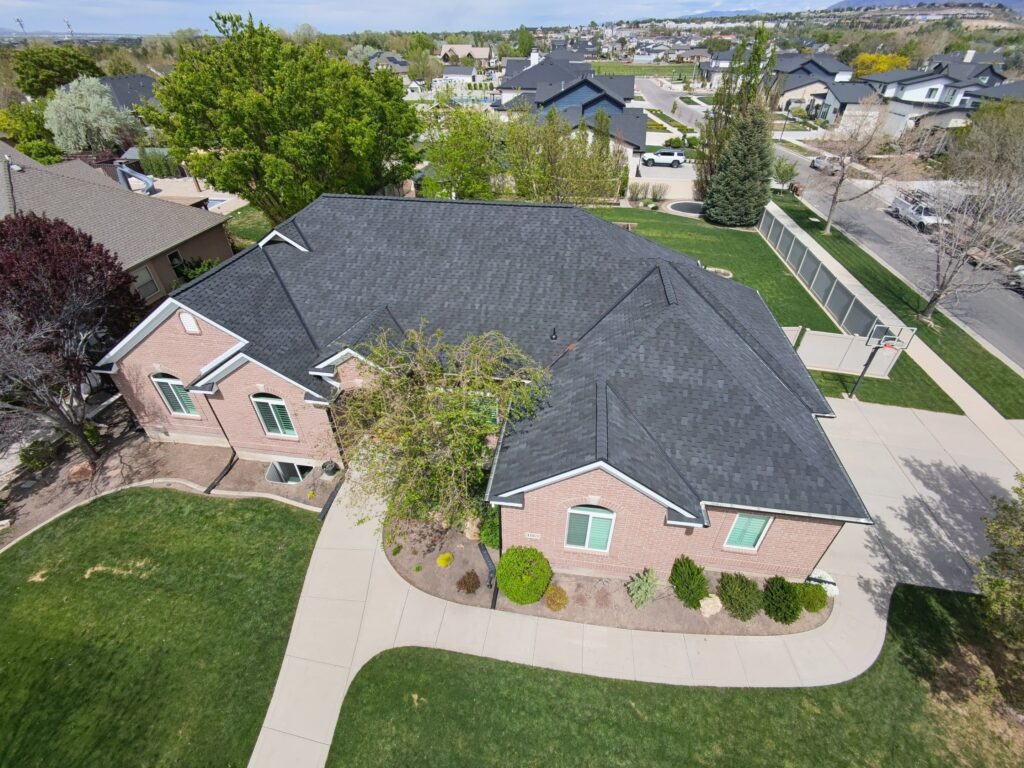
A roof valley is the inward angle where two sloping roof sections meet. It channels water from both sections toward the gutters.
Because valleys collect runoff, they need a clear drainage path. Leaves, twigs, and dirt can accumulate there, trapping moisture and allowing water to work beneath roofing materials.
Valleys also depend on proper installation. Damaged shingles, poorly installed valley details, or problems with the protective layers underneath can lead to leaks.
As GAF’s guide to roof valleys explains, debris removal and professional inspections help catch these problems early.
If a valley keeps leaking, clearing leaves may not be the complete solution. Ask your roofer to check the valley’s condition and construction, not just the surface debris.
3. Flashing: Protection Where Roof Sections Meet
Flashing is the protective material, usually metal, that directs water away from vulnerable roof areas. You will find it around chimneys, skylights, vents, and places where the roof meets a wall.
Over time, flashing can loosen, deteriorate, or become damaged. Poor installation can also leave openings for water, even when the surrounding shingles are in good condition.
Warning signs include loose or missing flashing, water stains near roof penetrations, and moisture around a chimney in the attic. These clues need an inspection because they can also point to other roofing problems.
GAF’s explanation of roof flashing shows why these details matter.
Rather than assuming another layer of sealant will solve the problem, ask whether the flashing itself needs repair or replacement.
Why Clean Gutters Will Not Prevent Every Ice Dam
Clean gutters help drainage, but ice dams are not simply a gutter problem.
An ice dam forms when snow melts on a warmer part of the roof and refreezes near a colder edge. Water can then collect behind that ridge of ice and leak beneath the roofing.
Heat escaping from the house into the attic often contributes to this uneven melting. That is why the University of Minnesota Extension’s ice dam guidance emphasizes air sealing and insulation, with appropriate ventilation supporting the roof system.
When winter roof leaks in Utah keep returning during snowmelt, the solution may need to include attic improvements—not just gutter cleaning.
Warning Signs You Should Not Ignore
You do not need to climb onto your roof to notice that something may be wrong. Watch for:
- New ceiling stains or drips, especially during rain or melting snow.
- Damp attic materials or musty smells, which can signal hidden moisture.
- Visible damage around roof details, including loose flashing or damaged shingles.
These signs do not identify the cause by themselves, but they are good reasons to schedule an inspection. Our guide to identifying roof leaks and warning signs explains what homeowners can look for.
How to Help Prevent Winter Roof Leaks in Utah
Start with the areas that move water off your home. Arrange for gutters, downspouts, and roof valleys to be cleared before snow and ice make access difficult. Have damaged shingles and flashing evaluated rather than covering up a recurring problem.
Next, pay attention to patterns. Does the same area leak during every thaw? Does ice repeatedly build up along the roof edge? Share those details with your roofer so the inspection can include possible drainage and attic heat-loss issues.
Finally, keep safety first. Do not climb onto a snowy or icy roof to investigate. Leave roof access and ice removal to qualified professionals, and call for help promptly if water starts coming inside.
Does a Winter Leak Mean You Need a New Roof?
Not necessarily.
An isolated flashing problem or damaged section of roofing may be repairable. However, recurring leaks, deteriorated decking, or widespread damage may require more extensive work.
The right response to winter roof leaks in Utah depends on the source of the water and the condition of the surrounding roof—not just the stain you can see.
At The Roof Doctor, our roof repair services include leak repairs, damaged shingles, and flashing problems. An inspection helps us explain whether a targeted repair makes sense or whether replacement deserves a closer look.
Get Help With Winter Roof Leaks in Utah
Before you head into winter wondering whether your roof will hold up, get a clearer picture of its condition.
The Roof Doctor helps homeowners throughout Salt Lake City, Sandy, West Jordan, West Valley City, Tooele, and surrounding communities with roof repairs and replacement options.
Contact The Roof Doctor to schedule a roof inspection or request an estimate. We will explain what we find and help you decide what needs attention.