Storm Damage Roof Repair in Utah: What to Do First After a Storm
If you need storm damage roof repair in Utah, start by checking your property safely from the ground, taking photos, and scheduling a professional roof inspection before making permanent repairs. The goal is to document the damage, prevent further issues, and avoid rushed decisions while you figure out the best next step.
When a strong storm hits, your first thought may be the obvious damage: fallen branches, dented cars, broken patio furniture, or power outages. But one of the most important places to check is your roof.
Hail, high winds, heavy rain, and flying debris can all damage your roofing system. Sometimes the damage is easy to see. Other times, it may be hidden until a leak shows up weeks or months later.
If you think you may need storm damage roof repair in Utah, it helps to know what to do next, what mistakes to avoid, and how to choose a roofer you can trust.
At The Roof Doctor, we help Utah homeowners inspect storm damage, understand repair or replacement options, and make confident decisions without pressure.
Why Storm Damage Should Not Be Ignored
Storm damage is not always dramatic. A few lifted shingles, loose flashing, dented vents, or missing granules may not look urgent from the ground, but those small issues can leave your roof more vulnerable to future leaks.
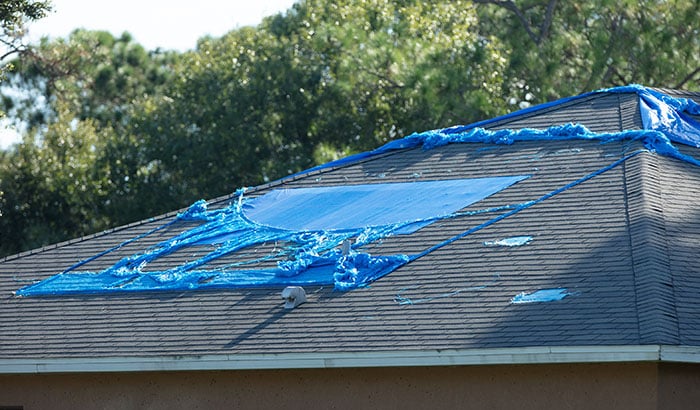
High winds can lift shingles, loosen sealant bonds, and crease shingles. Hail can bruise asphalt shingles, knock away protective granules, and weaken the shingle mat. Damaged gutters, downspouts, vents, flashing, and attic areas can also point to roof storm damage.
That is why it is important to check your property after a storm and schedule a roof inspection if anything looks suspicious.
DO: Check Your Property Safely From the Ground
After the storm passes and it is safe to go outside, start with a ground-level inspection. You do not need to climb onto your roof to spot possible warning signs.
Look for:
- Missing shingles
- Lifted, curled, or creased shingles
- Shingle pieces in the yard
- Dented gutters or downspouts
- Dents on roof vents, flashing, or metal trim
- Granules collecting near downspouts
- Fallen branches or debris on the roof
- Damaged siding, screens, or window trim
- Water stains on ceilings or walls
- Damp insulation or moisture in the attic
GAF explains how wind, hail, rain, flashing damage, and attic moisture can all point to storm damage.
If you notice any of these signs, write them down and take photos.
DON’T: Climb Onto the Roof After a Storm
A storm-damaged roof can be dangerous. Wet shingles, loose debris, soft decking, and steep slopes can all increase the risk of falling.
It is always safer to inspect what you can from the ground and call a professional roofer for a closer look. A trained roofing contractor can check shingles, flashing, vents, valleys, gutters, and attic areas safely.
Your safety is more important than trying to confirm damage yourself.
DO: Take Photos and Videos
Documentation matters.
Take photos or videos of anything you can safely see, including damaged shingles, dents, fallen branches, damaged gutters, water stains, or interior leaks. If hail fell at your home, take a photo of the hailstones if it is safe to do so.
The Utah Insurance Department recommends taking photos or video of storm damage and saving receipts for temporary repairs covered by your policy.
Even if you are not sure whether you will file an insurance claim, good documentation can help you keep track of what happened and when.
DON’T: Make Permanent Repairs Too Quickly
If your roof is leaking or exposed, you should take reasonable steps to prevent further damage. That may include placing buckets under leaks, moving belongings away from water, or arranging for temporary protection.
However, be careful about making permanent repairs before your insurance company has had a chance to inspect the damage. The Utah Insurance Department advises homeowners to make temporary repairs when needed to prevent further damage, but not to make permanent repairs until the insurance company has inspected the property and an agreement has been reached on repair costs.
If you are unsure, call your insurance company and ask what they need before repairs begin.
DO: Check Inside the Home Too
Storm damage does not always show up outside first. Sometimes the first sign is inside the attic or living space.
Check for:
- New ceiling stains
- Dripping water
- Damp insulation
- Musty smells
- Staining around vents or light fixtures
- Water near chimneys or skylights
- Sunlight showing through roof decking in the attic
If you see interior moisture after a storm, do not ignore it. Water can travel before it becomes visible, which means the source may not be directly above the stain.
DON’T: Assume No Leak Means No Damage
A roof can have storm damage even if water is not actively dripping into the home.
Hail damage may weaken shingles before a leak appears. Wind may lift shingles and break seals without removing the shingle completely. Flashing may loosen slightly and only leak during the next heavy rain.
Waiting too long can allow the damage to get worse. If your neighborhood had hail, strong wind, or flying debris, it is worth scheduling a roof inspection even if everything looks normal from the ground.
DO: Review Your Insurance Policy
If you think your roof may have hail or wind damage, review your homeowner’s insurance policy or call your insurance agent. Ask about your deductible, coverage type, claim process, and what documentation they need.
Many standard homeowners policies cover certain types of storm damage, including wind, wind-driven rain, falling objects, and collapse caused by the weight of ice or snow, but coverage depends on your policy and the facts of the damage.
A roofing contractor can inspect and document visible damage, but your insurance company decides what your policy covers.
DON’T: Let a Roofer Promise Insurance Approval
A roofer can help document roof damage. A roofer can provide photos, an estimate, and repair or replacement recommendations. In some cases, a roofer may also meet with an adjuster to answer roofing-related questions.
But a roofer cannot approve your claim.
Be cautious if someone guarantees that your insurance company will pay for everything. Your insurance company makes the coverage decision based on your policy, the storm event, the adjuster’s findings, and the condition of your roof.
DO: Schedule a Professional Roof Inspection
A roof inspection can help determine whether the damage is isolated, widespread, cosmetic, functional, repairable, or serious enough to consider replacement.
A good storm damage inspection should look at:
- Shingles
- Ridge caps
- Roof valleys
- Flashing
- Gutters and downspouts
- Roof vents
- Pipe boots
- Skylights or chimneys
- Attic moisture
- Signs of hail impact
- Signs of wind-lifted shingles
After the inspection, your roofer should explain what they found in plain language and provide photos when possible.
DON’T: Sign Paperwork You Do Not Understand
After a major storm, door-knockers may show up quickly. Some may be legitimate contractors. Others may be storm-chasing roofers who follow hail and wind events from neighborhood to neighborhood.
The Utah Department of Commerce warns homeowners to be cautious with door-to-door roof inspection offers after storms, especially when contractors ask homeowners to electronically sign documents that may authorize repairs or allow the contractor to submit claims directly to insurance.
Before signing anything, ask:
- Is this only permission to inspect?
- Does this authorize repairs?
- Does this give you permission to contact my insurance company?
- Am I signing over any insurance rights?
- What happens if insurance does not approve the work?
- Can I review this with my insurance company first?
If the answer is unclear, do not sign.
Red Flags When Door-Knockers Hit the Neighborhood
After a storm, it is common to see roofers working in the area. That does not automatically mean every door-knocker is dishonest, but homeowners should slow down and watch for red flags.
Be cautious if a contractor:
- Pressures you to sign immediately
- Says the deal is only good today
- Offers to waive or cover your deductible
- Asks for a large upfront payment
- Cannot prove they are licensed and insured
- Has no local reviews or references
- Uses vague paperwork
- Promises insurance approval
- Wants you to sign over insurance rights
- Says you do not need to contact your insurance company
- Cannot explain what damage they found
The Utah Insurance Department warns homeowners after storms to check references and licensing, get competitive estimates, avoid high advance payment demands, read contracts carefully, and be cautious with deductible-waiving offers. It also notes that offering to waive deductibles may be illegal.
How to Choose the Right Roofer for Your Home
Choosing a roofer after a storm should not feel rushed. Your roof protects your home, and storm damage repairs need to be done correctly.
Before hiring a roofing contractor, look for:
- A local Utah presence
- Proper licensing and insurance
- Recent local reviews
- Clear inspection photos
- A detailed written estimate
- Material and warranty information
- Straightforward communication
- No pressure to sign immediately
- A clear explanation of repair vs. replacement
- A realistic timeline
The Utah Department of Commerce says Utah contractors are required to obtain a license and liability insurance, and homeowners can verify a contractor through the Utah Division of Professional Licensing license lookup system.
A written agreement should include the price estimate, summary of work, materials, start date, estimated completion date, cleanup responsibility, and any warranty or guarantee details.
DO: Compare More Than Price
After a storm, it can be tempting to choose the roofer who can start the fastest or gives the lowest number. But storm damage repair is about more than price.
Compare:
- What each roofer found
- How clearly they explained the damage
- What is included in the estimate
- What materials are being used
- Whether flashing, underlayment, and ventilation are addressed
- What warranty applies
- Whether cleanup is included
- How responsive the company is
- Whether they have local proof of similar work
A trustworthy roofer should help you feel more informed, not more pressured.
Need Storm Damage Roof Repair in Utah?
If a storm recently hit your neighborhood, do not wait for small roof damage to become a bigger problem.
The Roof Doctor provides roof inspections, storm damage roof repair, roof replacement, and insurance-related roofing work throughout Salt Lake City, Sandy, West Jordan, West Valley City, and surrounding Utah communities.
Our team can inspect your roof, explain what we find, document visible damage, and help you understand the next step. Whether you are dealing with hail damage, wind damage, missing shingles, or a possible roof leak, we are here to help.
Contact The Roof Doctor today to schedule a storm damage roof inspection or request an estimate.